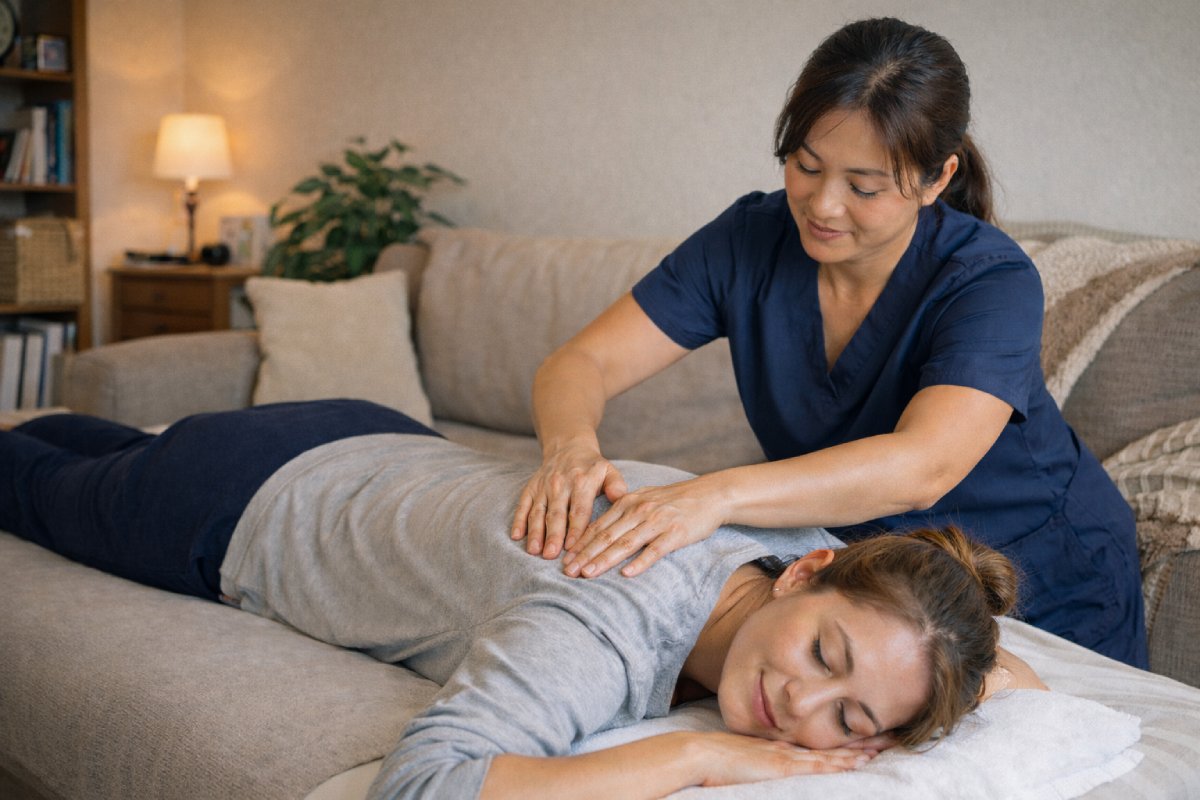
Have you ever noticed how quickly your body relaxes when someone gently rubs your shoulders?
It can happen in minutes.
Your breathing slows.
Your shoulders drop.
Your mind feels quieter.
That fast shift isn’t magic. It’s biology.
The human body is designed to respond to touch. Long before phones, emails, and constant notifications, humans relied on physical contact for safety, bonding, and reassurance. Touch is one of the first senses we develop in the womb and one of the last we lose later in life.
When you understand why the body reacts so quickly to massage, you start to see it differently. It’s not just about muscles. It’s about communication inside your body between your skin, your nerves, your brain, and your stress response all happening in real time.
Let’s break it down in simple, science-based language.
Table of Contents
- Key Takeaways (Quick Answer Section)
- Your Skin: The Body’s Largest Sense Organ
- The Nervous System: Your Built-In Communication Network
- Why Muscles Let Go So Fast
- Stress Hormones and Calm Chemicals
- The Brain’s Role in Relaxation
- Why Safe, Intentional Touch Feels Different
- Why Some People Feel Results Within Minutes
- Summary
- Frequently Asked Questions (FAQ)
Key Takeaways (Quick Answer Section)
If you’re short on time, here’s the clear explanation:
- The skin contains fast nerve pathways that send touch signals instantly.
- Massage can help shift the nervous system from stress mode to relaxation mode.
- Muscle tension often decreases when the brain receives signals of safety.
- Calming chemicals may increase during steady, intentional touch.
- The response is biological - not just psychological.
- Massage supports your body’s natural systems instead of forcing change.
Your Skin: The Body’s Largest Sense Organ
Your skin isn’t just a protective covering. It’s a highly intelligent sensory system.
It contains millions of receptors that detect:
- Pressure
- Temperature
- Vibration
- Movement
- Light touch
When steady, intentional pressure is applied during massage, these receptors send signals through your nerves to your brain almost instantly.
Here’s what’s important:
Your body does not wait to “analyze” touch first. It reacts automatically.
The signal travels from the skin → to the spinal cord → to the brain in a fraction of a second.
That fast pathway is one major reason massage can feel effective within minutes.
The Nervous System: Your Built-In Communication Network
To understand fast relaxation, we need to understand your nervous system.
It operates in two main modes:
1. Sympathetic Mode (Fight or Flight)
This is your stress mode.
- Heart rate increases
- Muscles tighten
- Breathing becomes shallow
- Attention narrows
It’s helpful in danger.
But many people stay in this mode too long due to work pressure, screen time, traffic, and daily stress.
2. Parasympathetic Mode (Rest and Relax)
This is your calm mode.
- Heart rate slows
- Breathing deepens
- Digestion improves
- Muscles soften
Massage often encourages a shift from stress mode into calm mode.
Slow, steady pressure can increase parasympathetic activity. And that shift can happen surprisingly fast sometimes within the first few minutes.
It’s not about “fixing” anything.
It’s about signaling safety.
When the body feels safe, it relaxes.
Why Muscles Let Go So Fast
Tight muscles aren’t always just about posture. They’re often about protection.
When you’re stressed, your nervous system sends signals to keep certain muscles slightly contracted. Over time, that feels like stiffness - especially in the neck, shoulders, and lower back.
During massage:
- Pressure stimulates sensory receptors in the muscle
- The brain receives updated information
- The brain may reduce the “protective hold” signal
It’s like the brain saying:
“You don’t need to guard right now.”
That communication loop between muscle and brain can shift quickly. That’s why shoulders often drop within minutes.
The body isn’t being forced to relax.
It’s being given permission to.
Stress Hormones and Calm Chemicals
Relaxation also involves chemistry.
When you’re stressed, your body releases hormones like:
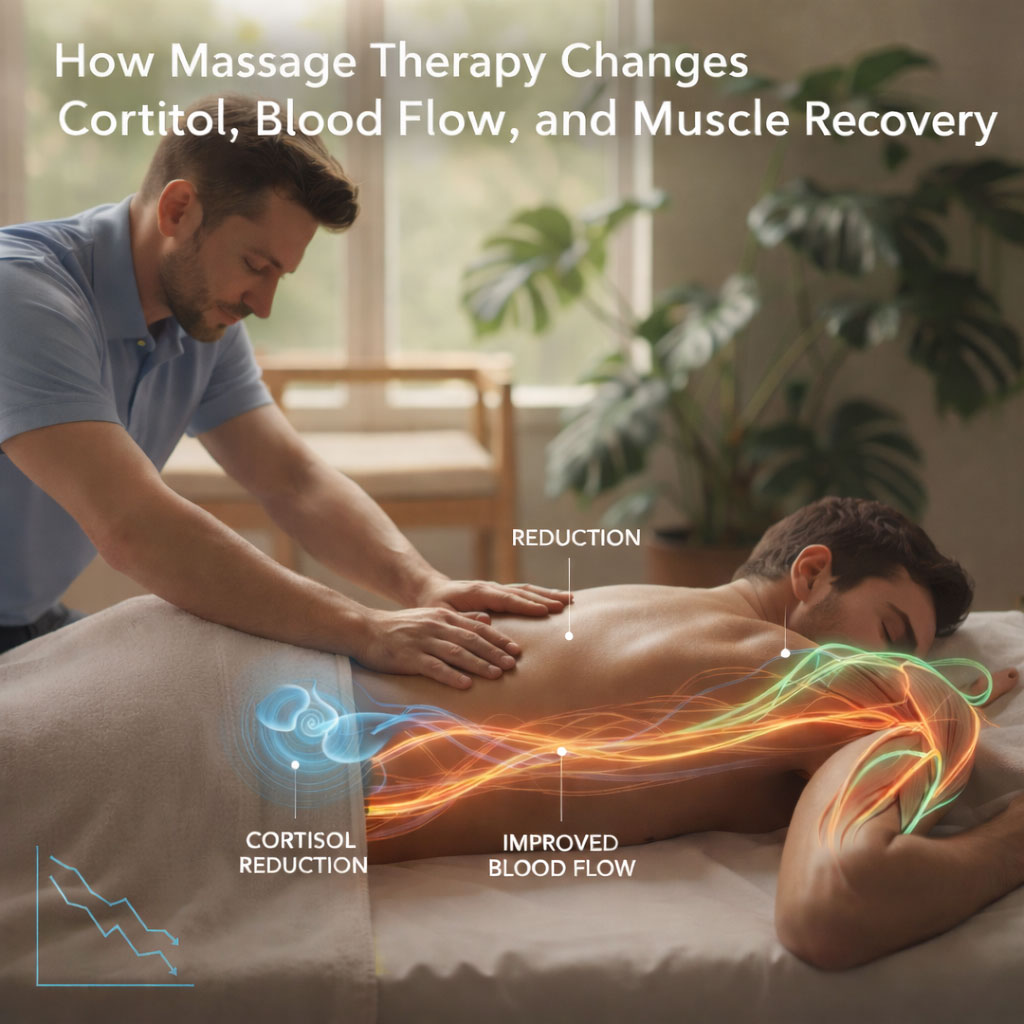
- Cortisol
- Adrenaline
These prepare you for action.
When you feel safe and relaxed, your body can increase calming chemicals such as:
- Serotonin (supports mood balance)
- Dopamine (linked to well-being)
- Oxytocin (associated with connection and trust)
Slow, intentional touch is associated with increased oxytocin activity. That chemical helps the body feel secure.
You don’t feel the chemicals directly.
But you feel the shift:
Your jaw unclenches.
Your breathing deepens.
Your thoughts slow down.
That’s chemistry responding to sensation.
The Brain’s Role in Relaxation
Massage isn’t just happening in your muscles. It’s happening in your brain.
Your brain constantly scans for safety.
When touch is steady and predictable, the brain often reads it as non-threatening. That lowers alertness levels.
Brain areas involved in:
- Emotion
- Memory
- Body awareness
respond to this type of input.
This is why people sometimes feel emotionally lighter after a session. The brain integrates physical sensation with emotional state.
Touch isn’t separate from emotion.
It’s deeply connected to how safe you feel in your body.
And safety changes everything.
Why Safe, Intentional Touch Feels Different
Not all touch creates the same response.
The body responds best to:
- Predictable pressure
- Calm pacing
- A quiet, comfortable environment
- Clear communication and boundaries
If touch feels rushed or unpredictable, the nervous system may stay alert.
If touch feels steady and intentional, the nervous system is more likely to shift toward calm.
Context matters.
The setting.
The pace.
The sense of professionalism and clarity.
All of these help the body relax more quickly.
Why Some People Feel Results Within Minutes
People often ask:
“Why do I feel relaxed so fast?”
Here’s why:
- Fast nerve signaling from the skin to the brain
- Automatic nervous system shifts
- Muscle-brain communication changes
- Calming chemical responses
- A sense of psychological safety
Not everyone responds at the same speed.
Some people relax immediately.
Others take more time, especially if stress levels are high.
But the body is wired to respond to safe, steady touch.
That’s the key idea.
Your body already knows how to relax.
Sometimes it just needs the right signal.
If you’re ready to experience how structured, professional touch can help your nervous system shift out of stress mode, Instant Masseuse brings science-informed massage directly to your home.
No travel. No waiting rooms. Just calm, intentional care in your own space.
Book your in-home session when you’re ready and let your body do what it was designed to do.
Summary
The quick response to massage makes sense when you understand the science.
Your skin detects pressure instantly.
Your nervous system reacts automatically.
Your brain constantly scans for safety.
Your muscles respond to signals from above.
When touch feels steady, safe, and intentional, your body relaxes quickly because it is designed to.
Massage doesn’t install a new system.
It works with the one you already have.
And that’s why the shift can feel almost immediate.
Frequently Asked Questions (FAQ)
- Why does my body relax within minutes of a massage?
Touch sends rapid signals through the nervous system. When the brain senses safe, steady pressure, it can shift the body into relaxation mode quickly.
- Is massage just psychological, or is it physical too?
It’s both. Touch affects muscles, nerves, and chemical signals. The relaxation response has clear biological foundations.
- Why do my shoulders drop so quickly?
Shoulder tension is often tied to stress signals. When the nervous system shifts toward calm, protective muscle tension can decrease.
- Does everyone respond the same way?
No. Some people relax immediately. Others take longer. Stress levels, comfort, and environment all influence the response.
- How does touch affect stress hormones?
Relaxing touch is associated with lower stress activity and increased calming chemical responses.
- Why does massage sometimes feel emotional?
Touch connects to brain areas involved in emotion and memory. When the body relaxes, emotional tension may soften.
- Is massage a medical treatment?
Massage is commonly used as a wellness and relaxation practice. It supports comfort and stress reduction but is not a replacement for medical care.
Why Instant Masseuse?
Instant Masseuse is about more than simply scheduling a massage. We believe massage works best when it’s understood when it becomes a meaningful part of how you support your body and nervous system over time, not just a one-time visit.
Whether you’re navigating daily stress, recovering from physical strain, or looking for a more practical way to care for yourself in Toronto and the GTA, mobile massage helps remove the extra steps that often get in the way. There’s no commute, no waiting room, no added pressure on your schedule. Just professional care delivered where you already are.
If you’re considering whether on-demand massage fits into your lifestyle, or you’d simply like more clarity before booking, we’re here to help. Our priority isn’t rushing a decision it’s making sure you feel informed, comfortable, and confident in choosing what genuinely supports your well-being.